Existing power point
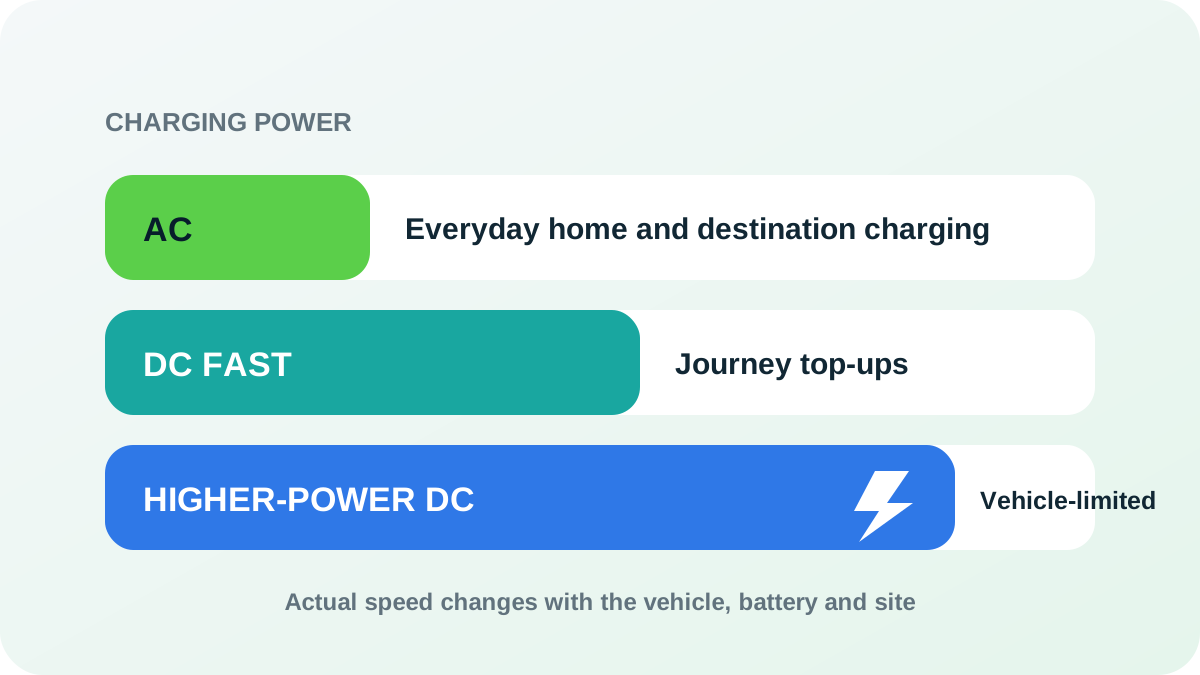
Useful for lower daily distances where the outlet and circuit are suitable. A licensed electrician should confirm the installation can safely support sustained charging.
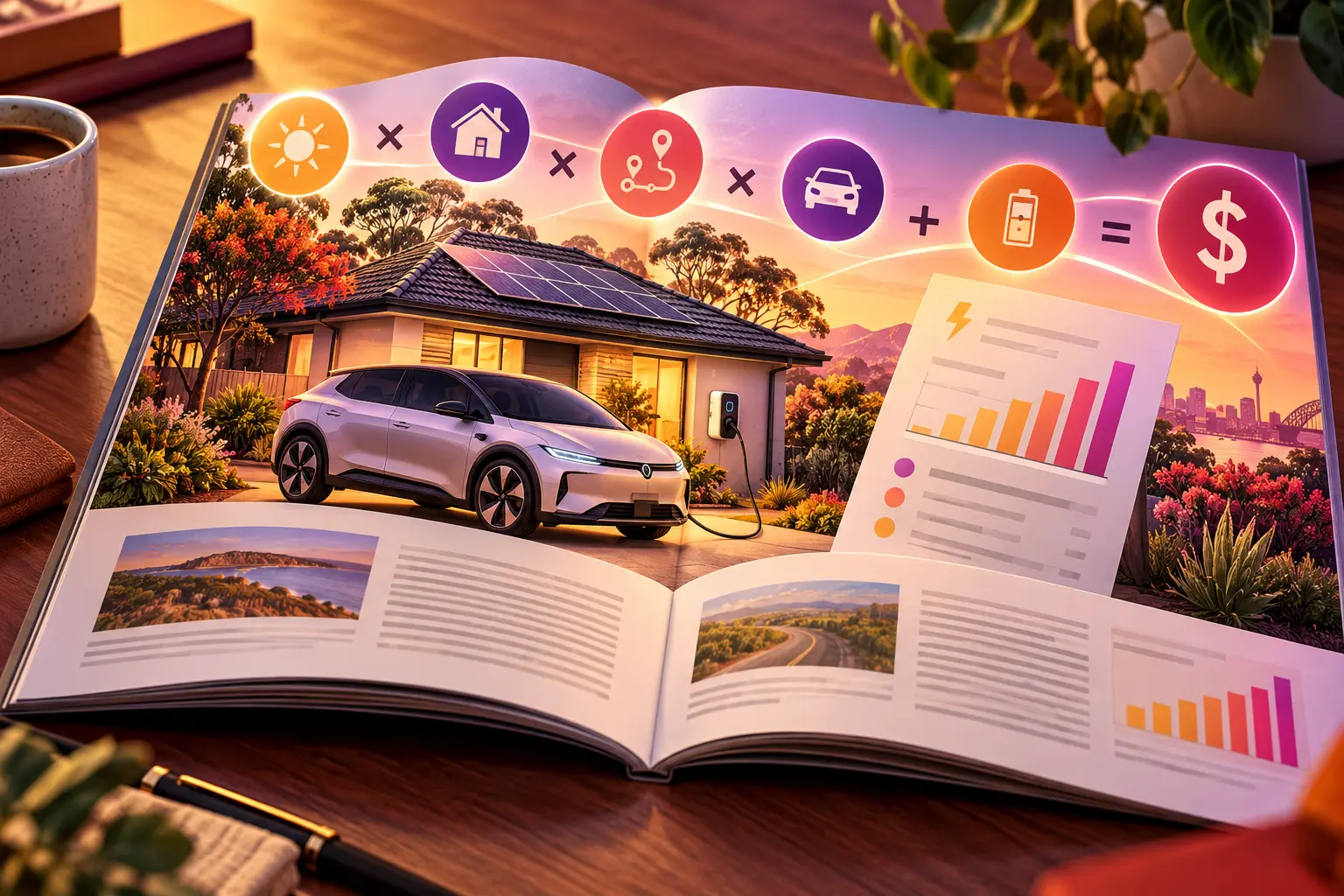
Use your real tariff, solar and driving assumptions, then prepare the information a licensed electrician needs to assess your property.
General information only. Electrical work must be assessed and completed by an appropriately licensed professional.
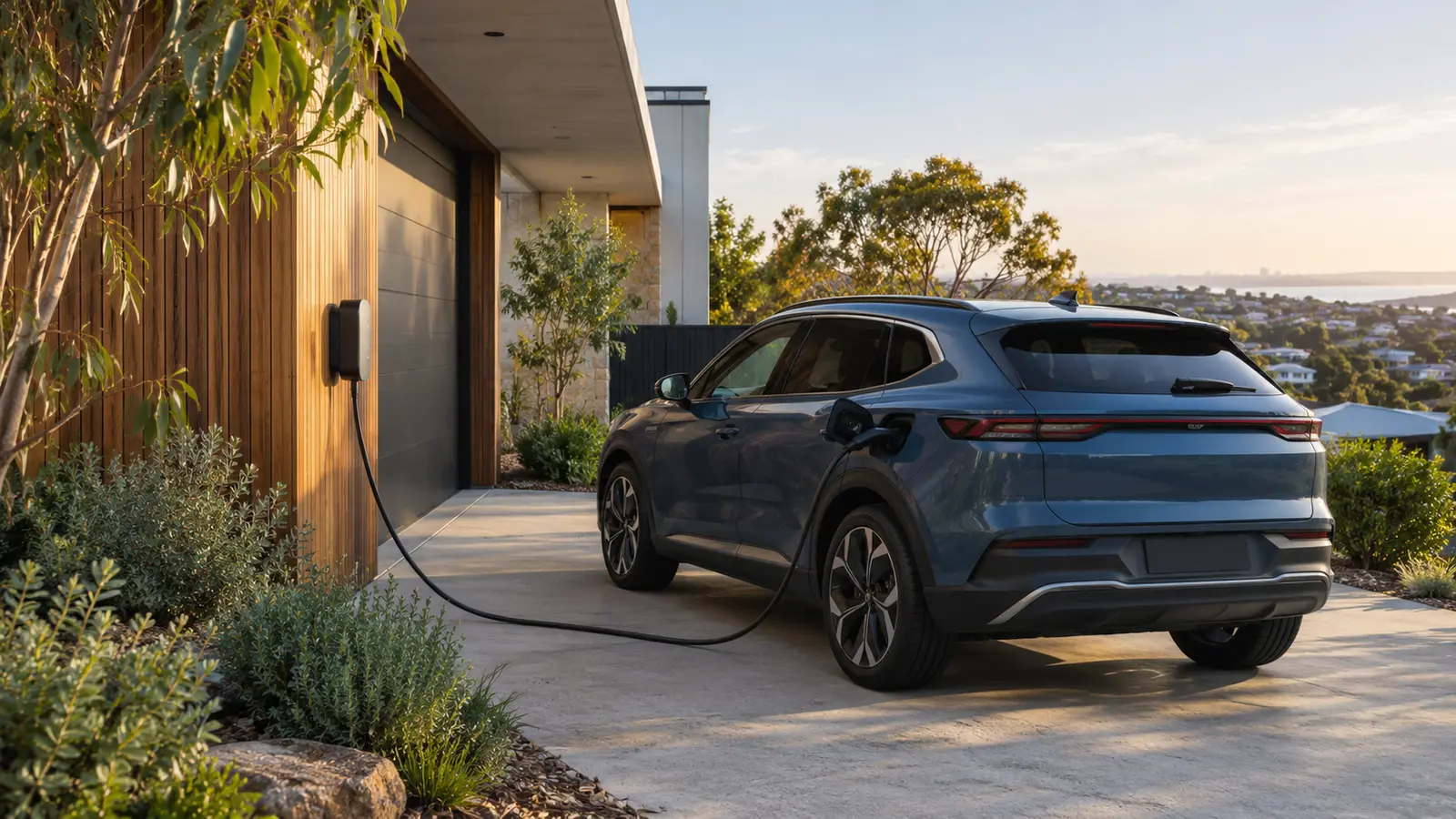
Start with the energy you need to replace overnight. Property capacity, vehicle limits, cable distance, solar timing and budget then shape the installation.
Useful for lower daily distances where the outlet and circuit are suitable. A licensed electrician should confirm the installation can safely support sustained charging.
Often the practical balance for overnight charging. Actual power depends on the property supply, circuit, charger and vehicle.
May suit compatible vehicles and properties, but requires three-phase supply and does not guarantee the vehicle will accept the full charger rating.
The result is an energy-cost estimate—not an equipment or installation quote.
Adjust the assumptions to match your vehicle, electricity plan and driving.
Estimates only. Retail tariffs, solar opportunity cost, charging losses, battery conditioning, vehicle efficiency and public-network fees vary. Confirm prices with your electricity retailer and charging provider.
Prefer a dedicated page? Open the full calculator guide
Gather these before asking for equipment recommendations. The installer still needs to verify the site and applicable requirements.
Daily distance, overnight dwell time and where the vehicle can park consistently.
Supply phase, switchboard condition, available capacity and any load-management requirement.
Distance from the switchboard, wall or pedestal location, weather exposure and physical protection.
The vehicle’s onboard AC limit, charging schedule, solar availability and future vehicle plans.
EV Navigator is preparing a small referral pilot with clear service standards and measurable outcomes. No homeowner installation details are being collected during partner selection.